
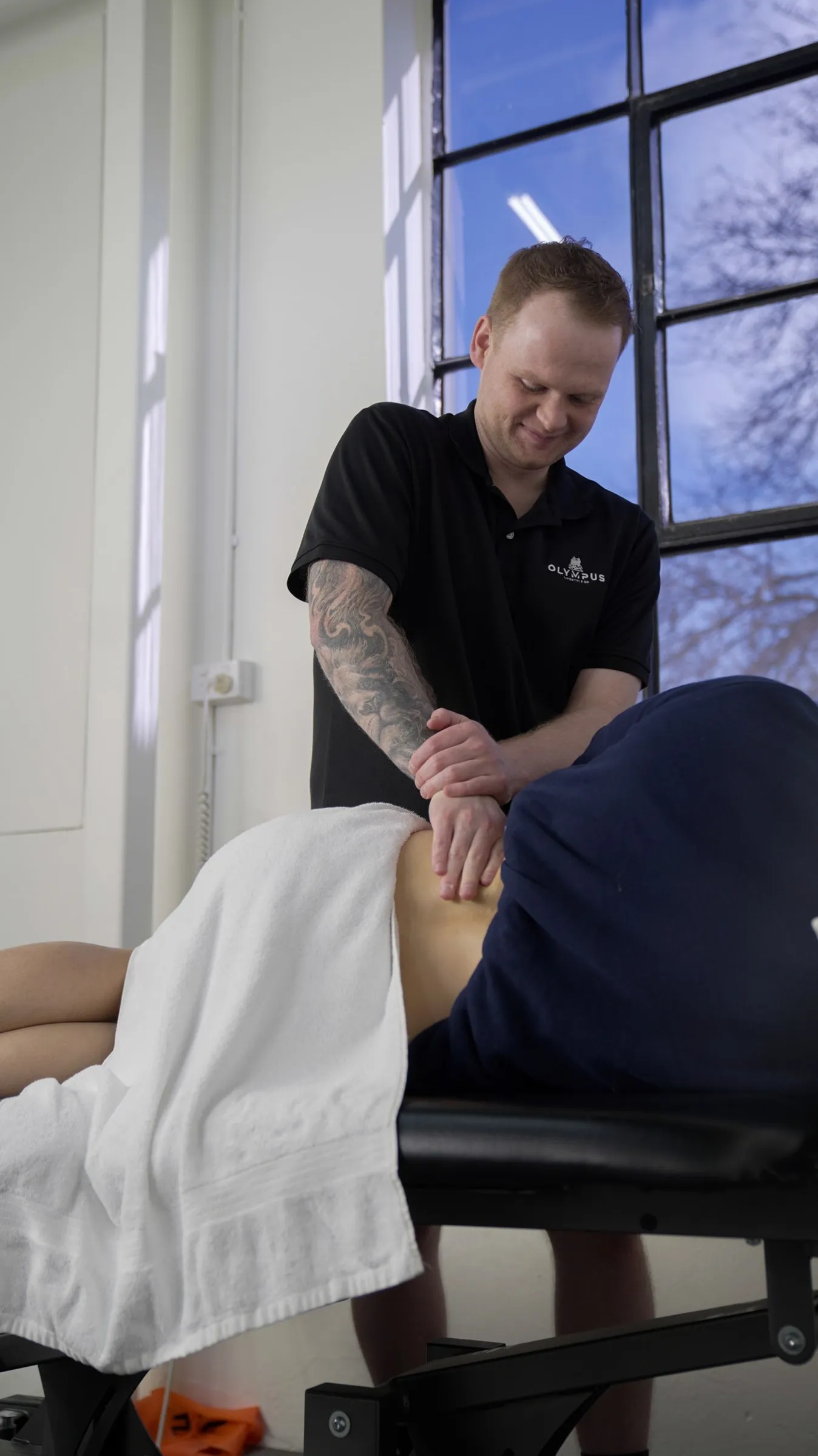
Lower back pain is one of the most common reasons people walk through our doors — and one of the most treatable when it’s properly assessed rather than just “managed.” Around 4 in 5 Australian adults will experience an episode of low back pain significant enough to affect their daily activity, work, or training at some point in their life. Whether yours arrived suddenly after a lift, crept in from long hours at a desk, or has been quietly limiting your training for months, our approach starts with figuring out what’s actually driving it — not guessing.
Understanding lower back pain
“Lower back pain” isn’t a single diagnosis — it’s a description of where you feel pain, which can come from several different structures and mechanisms. Current best-practice guidelines from bodies like the Australian Physiotherapy Association emphasise that effective care depends on correctly categorising your presentation (for example, whether your pain centralises with certain movements, or whether you have signs of a movement coordination impairment) rather than applying a one-size-fits-all protocol.
What causes lower back pain
Most lower back pain is “mechanical” in nature, meaning it relates to how the spine, discs, joints, and surrounding muscles are moving and coping with load, rather than a serious underlying disease. Common contributing factors we see in the clinic include:
- Muscular strain or spasm — often from an unaccustomed lift, awkward movement, or sudden increase in training load
- Disc-related irritation — including bulges or degeneration that irritate nearby structures, often aggravated by prolonged sitting or forward bending
- Facet joint pain — the small joints at the back of each vertebra, often sensitive to extension and rotation movements
- Sacroiliac (SI) joint dysfunction — pain at the base of the spine, common after pregnancy, impact, or asymmetric loading
- Deconditioning and load intolerance — reduced trunk strength and endurance relative to the demands you’re placing on your back (desk-based work, manual labour, or a sudden return to training)
- Postural and movement habits — sustained positions or repeated movement patterns that gradually overload sensitive tissue
Symptoms we commonly assess
- Localised or spreading ache across the lower back
- Stiffness that’s worse first thing in the morning or after sitting
- Pain with specific movements — bending forward, extending backward, twisting, or lifting
- Muscle spasm or a “locked up” feeling
- Pain that occasionally spreads into the buttock or upper thigh (distinct from true sciatica — see our sciatica page if pain travels further down the leg)
Our evidence-based approach
Clinical guidelines consistently support a combination of manual therapy, targeted exercise, and education as the most effective conservative approach to lower back pain, for both acute and chronic presentations. In practice, this looks like:
- Thorough assessment — understanding your specific pain pattern, movement restrictions, and load history, not just the location of pain
- Hands-on treatment — joint mobilisation and soft tissue work to reduce pain and restore movement in the early stages
- Directional and centralising exercises — where appropriate, using repeated movements in the direction that reduces your symptoms
- Progressive strengthening — trunk coordination, strengthening, and endurance work, since research shows this reduces both pain and disability in subacute and chronic presentations
- Load and activity education — practical guidance on what to modify short-term and how to safely return to lifting, training, or your job
What to expect: recovery timeline
Every back is different, but as a general guide:
- Acute, first-episode pain: many people see meaningful improvement within 2–6 weeks with the right early guidance and graded activity
- Recurrent or longer-standing pain: often requires 3–6 months of progressive rehabilitation to build the strength and movement resilience needed to prevent it recurring
- Ongoing management: for those with a history of recurrent back pain, a maintained strength and conditioning program is one of the best-supported ways to reduce future flare-ups
When to seek help urgently
Most lower back pain is safe to treat conservatively, but see a doctor immediately if you experience:
- Numbness around the groin, inner thighs, or saddle area
- New loss of bladder or bowel control
- Progressive weakness in one or both legs
- Severe pain following a fall, accident, or significant trauma
- Unexplained weight loss alongside back pain
These are uncommon, but they’re the reason a proper assessment always comes first.