
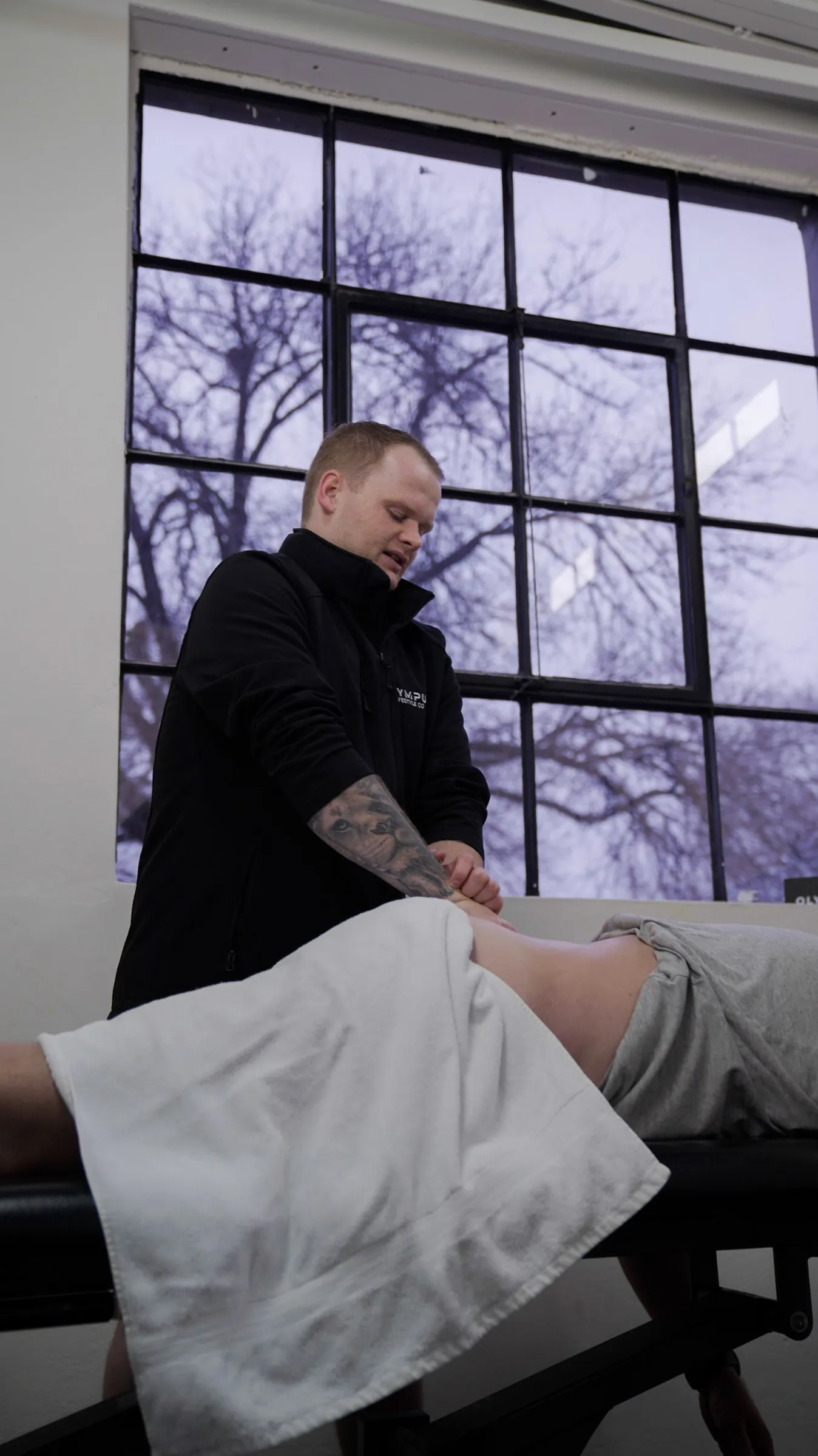
Sciatica describes pain, numbness, or tingling that travels from the lower back down through the buttock and leg — often past the knee, and sometimes into the foot — usually related to irritation of the sciatic nerve or one of its contributing nerve roots. It can be intense and disruptive, disturbing sleep and limiting basic movement, but it generally responds well to the right physiotherapy approach.
Understanding sciatica
The sciatic nerve is formed from nerve roots exiting the lower spine and runs down the back of the leg — it’s the longest and widest nerve in the body. Sciatica occurs when one of these contributing nerve roots is irritated or compressed, most commonly by a disc bulge, though other structures (such as the piriformis muscle, in less common cases) can also contribute.
Common causes we assess
- Disc bulge or herniation — the most common cause, where disc material irritates a nearby nerve root
- Spinal stenosis — narrowing of the space around the nerve, more common with age
- Piriformis-related irritation — where a deep hip muscle contributes to nerve irritation (less common than disc-related causes, but worth differentiating)
- Degenerative changes — age-related changes to the disc and joints that can reduce space around the nerve root
Symptoms of sciatica
- Pain radiating from the lower back or buttock down the back or side of the leg, often past the knee
- Numbness, tingling, or a “pins and needles” sensation along the same path
- Pain that may be worse with sitting, bending forward, or coughing/sneezing
- In some cases, mild weakness in the foot or leg
- Symptoms that can range from a dull ache to sharp, shooting pain
Our evidence-based approach
Clinical guidelines support physiotherapy as a first-line, evidence-based approach for sciatica, generally over a 4 to 12 week course. While the certainty of evidence varies across studies, physiotherapy interventions are shown to be more effective than minimal intervention for pain, particularly at longer-term follow-up. Our approach typically includes:
- Careful assessment to confirm the nerve-related source of symptoms and rule out other contributing structures
- Hands-on treatment, including gentle mobilisation, to reduce irritation and improve mobility
- Nerve gliding (neurodynamic) exercises, which help the nerve move more freely relative to surrounding tissue
- Directional preference exercises — movements that centralise symptoms (bring pain back up towards the spine, away from the leg) are prioritised, following the same principles used for lower back pain
- Targeted strengthening, building trunk and hip capacity to reduce recurrence once the acute episode settles
- Clear guidance on positions and movements to ease symptoms day-to-day, particularly around sitting and bending
What to expect: recovery timeline
- Mild-to-moderate sciatica: many people notice a meaningful reduction in leg symptoms within 2–4 weeks, though full resolution often takes longer
- More significant nerve irritation: may take the full 4–12 week guideline window, with gradual centralisation of symptoms (pain retreating from the leg back towards the spine) as a positive sign of progress
- Ongoing management: addressing strength and movement patterns after the acute episode settles reduces the likelihood of recurrence
When to seek help urgently
Seek same-day medical assessment if you experience numbness around the groin or saddle area, new loss of bladder or bowel control, or progressive weakness in the leg or foot. These are uncommon with typical sciatica but require prompt investigation.