
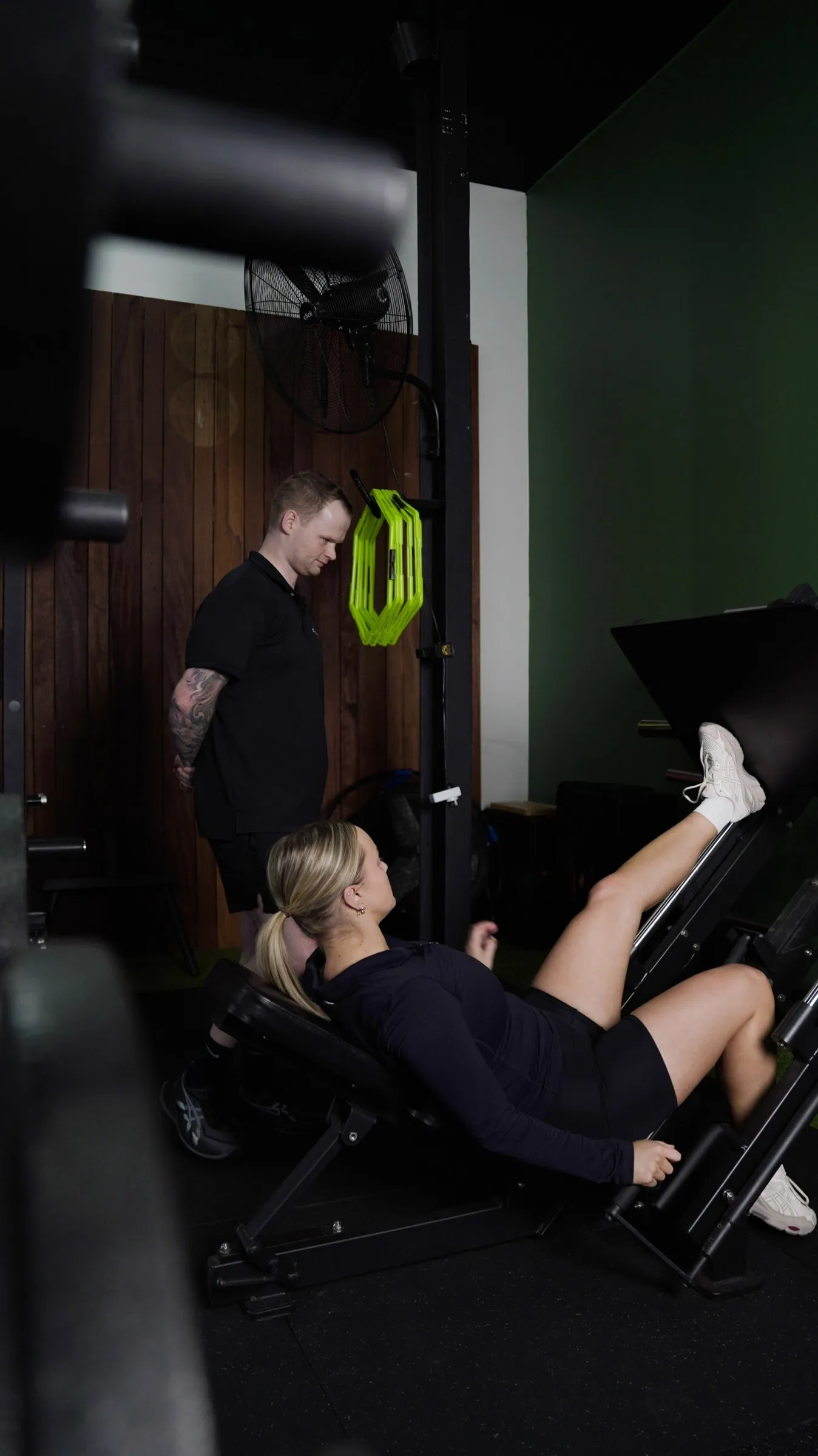
An ACL injury is a long road, and it deserves a program built specifically around it — not a generic knee rehab plan borrowed from a meniscus or general knee pain protocol. Our ACL rehabilitation program follows a criteria-based, phase-by-phase structure from the earliest post-injury or post-surgical stage through to full, objectively tested return to sport.
Understanding ACL injury and rehabilitation
The anterior cruciate ligament (ACL) is one of the primary stabilising ligaments of the knee, most commonly injured through a twisting or pivoting mechanism in field and court sports. Whether managed surgically or conservatively, the path back to sport depends far more on rebuilding strength, control, and confidence than on the passage of time alone — research is unambiguous that decisions based on the calendar rather than objective readiness carry a substantially higher re-injury risk.
Why criteria-based rehab matters
Studies consistently show that athletes who meet objective return-to-sport criteria — particularly at least 90% quadriceps strength symmetry between limbs — have a re-injury rate around 5.6%, compared to over 38% for those who return based on time alone. Overall, research shows roughly 82% of people return to some sport after ACL reconstruction, but only 63% return to their exact pre-injury sport and 44% to competitive-level play — figures that improve meaningfully with structured, criteria-based rehabilitation and psychological readiness alongside physical recovery.
Our ACL program covers
- Early-stage management — swelling control, range of motion, and pain management in the first weeks
- Progressive strength and control rebuilding, addressing the quad strength deficit that almost always follows ACL injury or reconstruction
- Neuromuscular and landing control work, since movement quality under load is as important as raw strength
- Sport-specific movement and agility retraining as strength benchmarks are met
- Objective strength and hop testing via VALD performance technology, targeting at least 90% limb symmetry before higher-level activity
- Psychological readiness — confidence in the knee is a recognised, measurable factor in successful return to sport, not just a “soft” consideration
What to expect: recovery timeline
- 0–3 months: swelling control, range of motion, early strength work, gait normalisation
- 3–6 months: progressive strengthening, introduction of running and change-of-direction work as tolerated
- 6–9 months: sport-specific training, plyometrics, and agility work
- 9–12 months: objective testing and graded return to full training and competition
Working closely with your surgeon where relevant, we make sure every phase is earned through measured progress, not time alone. Once you’re cleared, many athletes continue training in the same space through our gym memberships, rather than stopping the day rehab ends.