
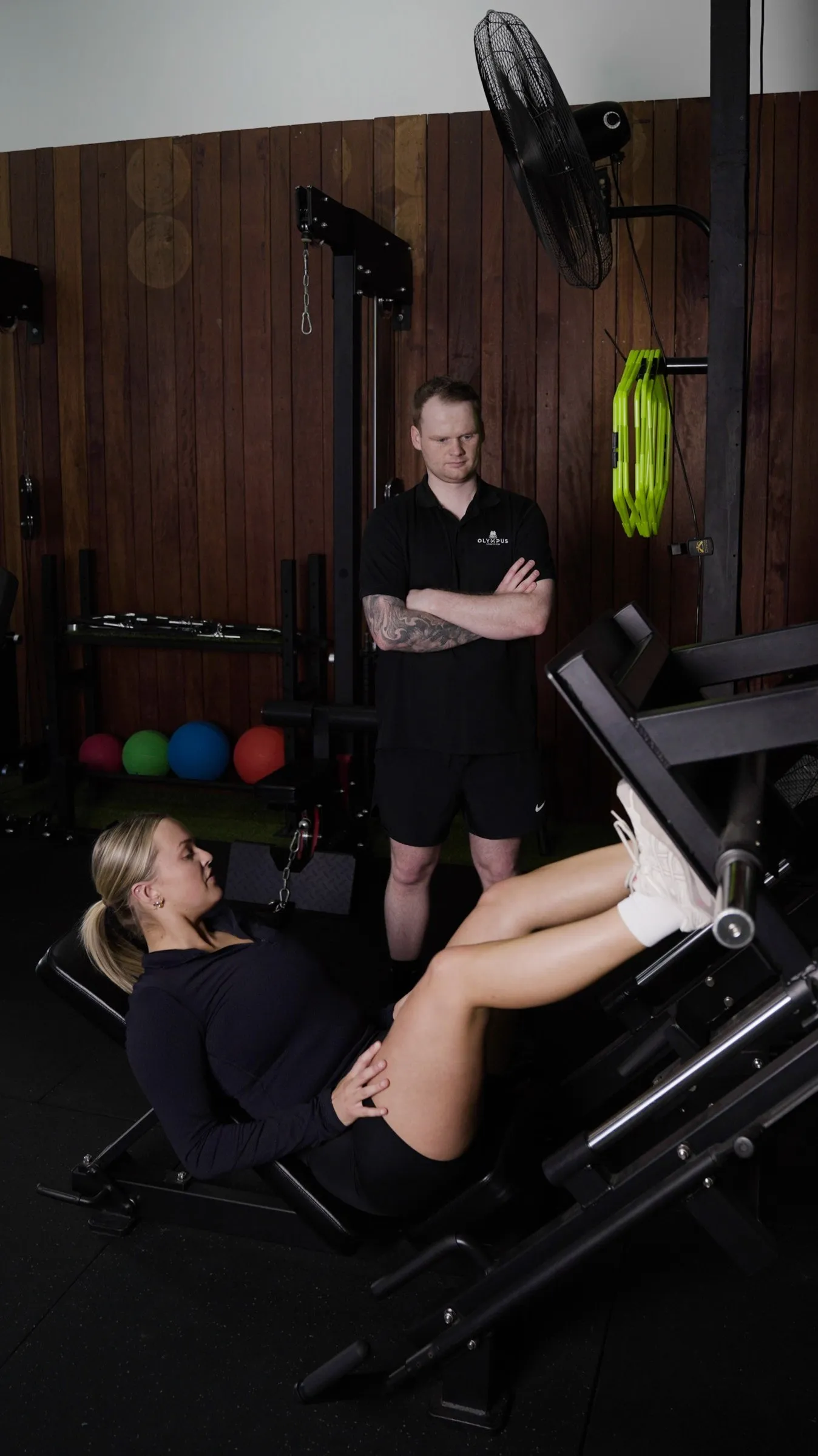
Sports physiotherapy at Olympus Lifestyle Co is about more than pain relief — it’s about a confident, tested return to the sport or activity you love. We combine hands-on treatment with sport-specific rehabilitation and objective performance testing to guide every stage of your recovery, from the first days after injury through to full return to competition.
Who this is for
Athletes and active people dealing with acute injuries, recurring niggles, or those wanting a pre-season screen to reduce injury risk before it happens. This includes field and court sport athletes, runners, gym-goers, and anyone training regularly enough that an injury genuinely disrupts their routine.
Why criteria-based return to sport matters
The research here is compelling: athletes who pass objective return-to-sport testing — including at least 90% strength symmetry between limbs, and specific hop and performance benchmarks — have a re-injury rate of around 5.6%. Those who return based on time elapsed alone, without meeting these criteria, have a re-injury rate of over 38%. That’s a substantial difference, and it’s the reason we build testing into the rehabilitation process from early on, not just at the very end.
Our approach
- Detailed injury assessment and diagnosis — understanding exactly what’s injured and why
- Sport-specific rehabilitation programming, matching the movement demands of your particular sport (cutting, pivoting, throwing, jumping)
- Progressive loading and strength rebuilding, addressing deficits specific to your injury
- VALD performance testing to track objective readiness at each stage, not just at the final clearance
- Clear return-to-play criteria — you return when the data says you’re ready, not on a fixed date
Common injuries we manage
Hamstring and calf strains, ankle and knee ligament sprains, ACL injuries (see our dedicated ACL Rehabilitation page), tendinopathies, and the recurring niggles that flare up during pre-season or heavier training blocks.
What to expect
Your first visit includes a thorough assessment of the injury itself alongside broader strength and movement testing relevant to your sport. From there, we build a staged rehabilitation plan with clear milestones — not just “come back when it feels better” — culminating in objective testing before you’re cleared for full training and competition.