
Surgery is often just the first step — what happens afterwards determines how well you recover, and how confidently you return to the activities that matter to you. Our post-surgical rehabilitation programs are built around your surgeon’s specific protocol, your goals, and a realistic timeline, rather than a generic “knee” or “shoulder” program applied to every patient regardless of procedure.
Why protocol-led rehab matters
Every surgical procedure comes with a tissue healing timeline specific to what was repaired or reconstructed. Progressing rehabilitation too quickly can put a surgical repair at risk; progressing too cautiously leaves strength and function unnecessarily delayed. Modern post-surgical rehabilitation increasingly uses criteria-based progression — moving to the next stage once specific strength and function benchmarks are met, not simply once a certain number of weeks has passed.
What to expect across your recovery
- Early phase: protocol-aligned management of swelling, pain, and protected range of motion
- Middle phase: progressive strengthening and functional retraining as tissue healing allows
- Late phase: higher-level strength, control, and (where relevant) sport-specific or work-specific retraining
- Return to activity: objective testing to confirm readiness, rather than clearance based on time alone
Our approach
- Protocol-aligned, staged rehabilitation, working directly from your surgeon’s specific post-operative guidelines
- Regular reassessment as you progress through each recovery phase, adjusting where needed
- Progressive loading and strengthening, addressing the specific deficits your procedure and recovery stage present
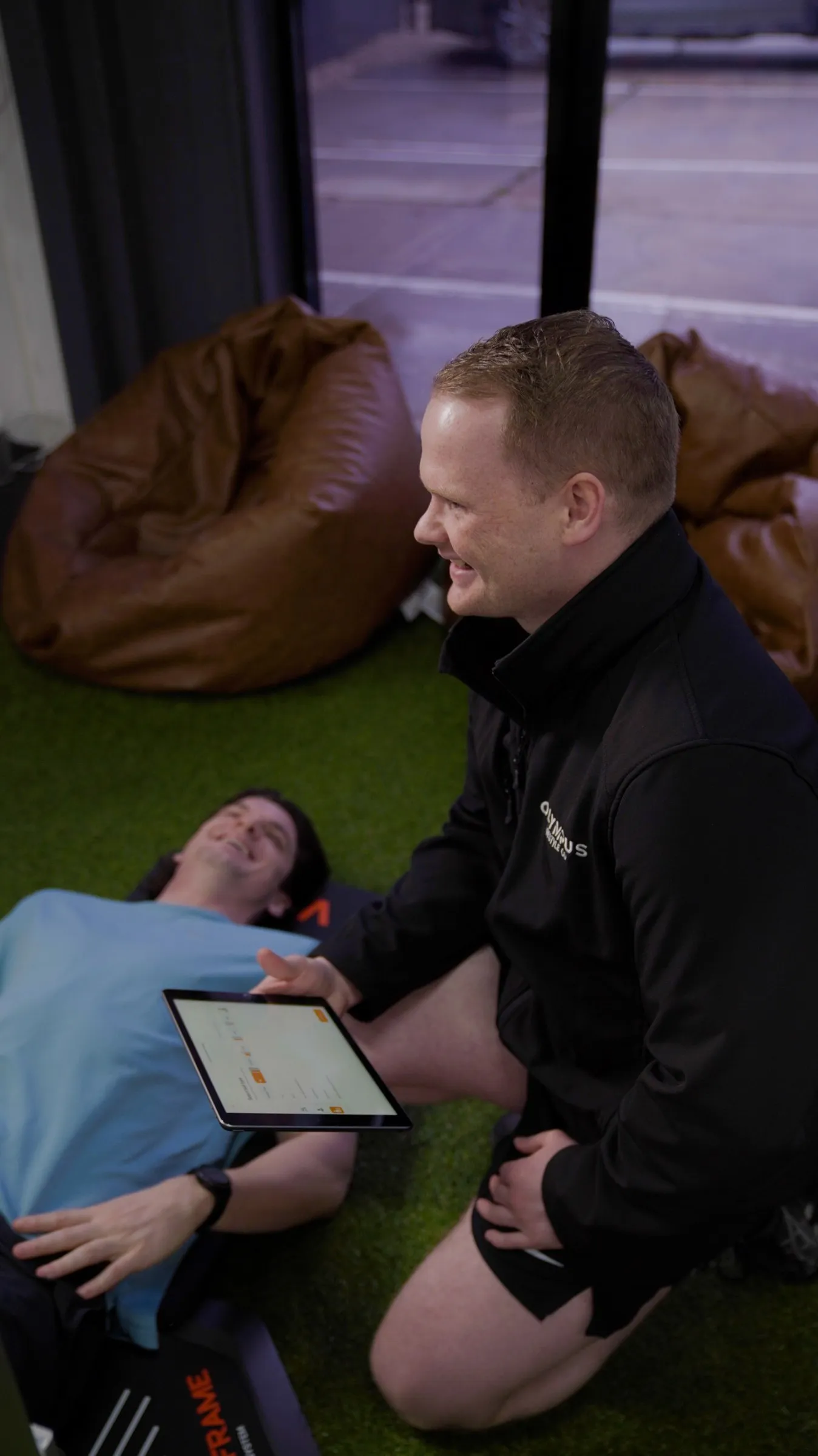
- VALD performance testing before clearing higher-level activity, particularly after significant lower limb procedures — targeting benchmarks like 90% strength symmetry between limbs
- Direct communication with your surgical team where needed, keeping your rehabilitation and surgical follow-up aligned
Procedures we commonly support
Knee reconstruction and replacement, shoulder rotator cuff and stabilisation repair, hip replacement and arthroscopy, ankle ligament reconstruction, and spinal discectomy or fusion recovery. For ACL-specific rehabilitation, see our dedicated ACL Rehabilitation page.
Whether you’re recovering from a joint reconstruction, spinal procedure, or other orthopaedic surgery, our physiotherapists guide you safely and confidently from early recovery back to full function. Once you’re there, our gym memberships let you keep training in the same space, rather than starting over somewhere new.