
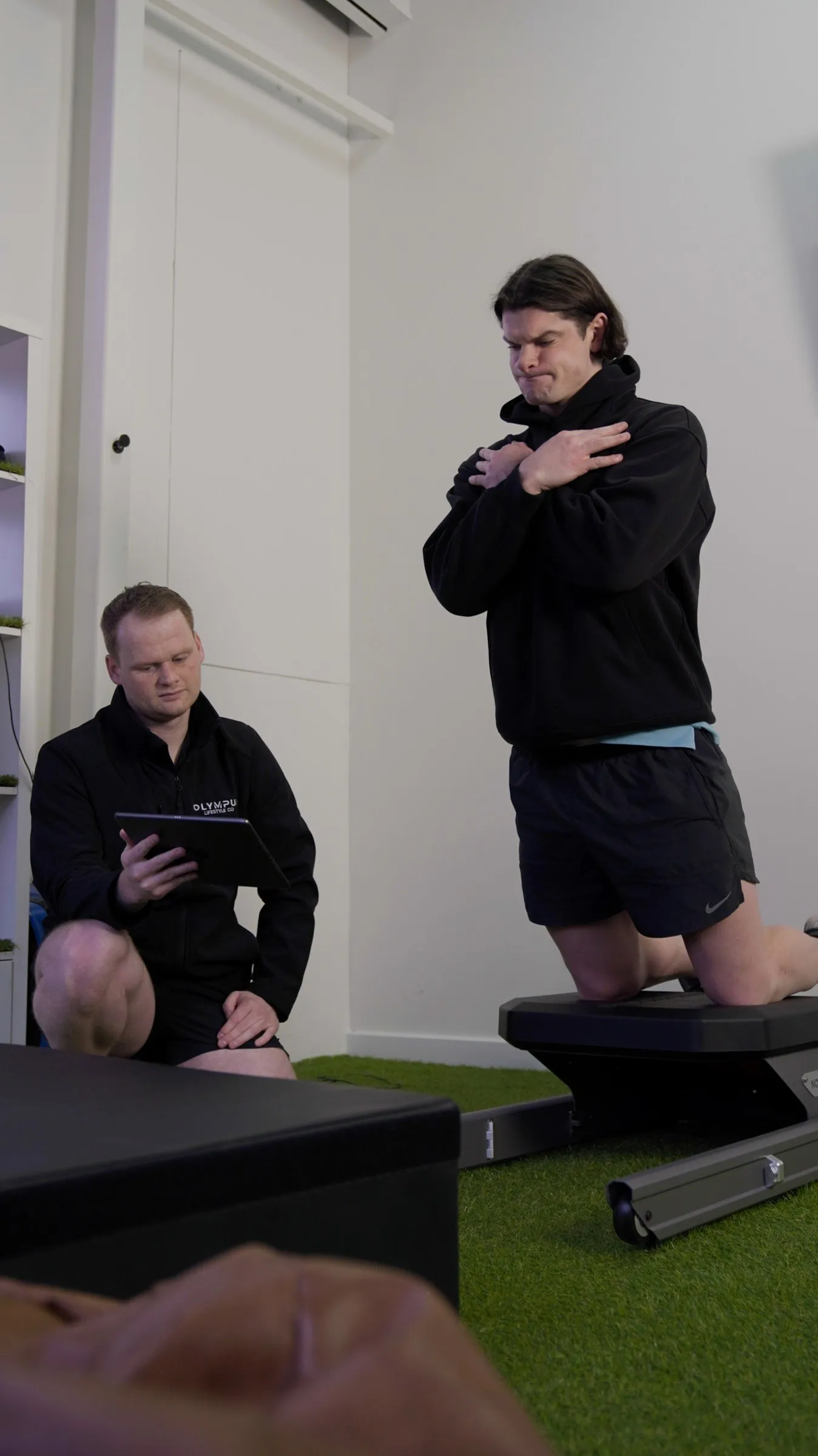
Surgery is often just the first step — what happens afterwards is what determines how well, and how fully, you recover. Whether you’ve had a joint reconstruction, spinal procedure, or other orthopaedic surgery, structured rehabilitation aligned with your surgeon’s specific protocol is what turns a successful operation into a full return to the life and activity you want back.
Understanding post-surgical recovery
Surgery repairs or reconstructs damaged structures, but it doesn’t restore strength, movement control, or confidence — that has to be rebuilt through a deliberate, staged rehabilitation process. Every surgical protocol is built around tissue healing timeframes specific to the procedure, which is why following your surgeon’s staged guidelines (rather than “listening to how it feels” alone) matters, particularly in the early weeks.
Surgeries we commonly support recovery from
- Knee surgery — ACL and other ligament reconstruction, meniscus repair, and knee replacement
- Shoulder surgery — rotator cuff repair, labral repair, and shoulder stabilisation procedures
- Hip surgery — hip replacement and hip arthroscopy
- Ankle surgery — ligament reconstruction and fracture fixation
- Spinal surgery — discectomy and spinal fusion procedures
What early-stage recovery typically involves
- Managing swelling and pain in the days and weeks following surgery
- Restoring early range of motion within the limits your surgeon sets
- Protecting the surgical repair while beginning gentle, appropriate movement
- Preventing secondary issues like excessive stiffness or muscle wasting from inactivity
Our evidence-based approach
Modern post-surgical rehabilitation has moved away from rigid, time-based programs towards criteria-based progression — meaning you move to the next stage when you meet specific strength and function benchmarks, not simply when a certain number of weeks have passed. This is particularly well-evidenced for ACL reconstruction, where research shows athletes who pass objective return-to-sport testing (including at least 90% strength symmetry between limbs) have dramatically lower re-injury rates than those cleared on time alone.
Our approach includes:
- Protocol-aligned early-stage rehabilitation, working directly from your surgeon’s specific guidelines
- Regular reassessment as you progress through each recovery phase
- Progressive strengthening, rebuilding capacity systematically rather than rushing back to full load
- VALD performance testing to objectively measure strength symmetry, hop performance, and readiness before clearing higher-level activity
- Direct communication with your surgical team where needed, so your rehabilitation and surgical follow-up stay aligned
What to expect: recovery timeline
- Minor arthroscopic procedures: often 6–8 weeks of structured rehabilitation
- Rotator cuff repair: typically a 4–6 month program following your surgeon’s specific protocol
- ACL reconstruction: a 9–12 month return-to-sport timeline is standard, guided by objective testing rather than the calendar alone
- Joint replacement: an initial 6–12 week intensive phase, with ongoing strengthening continuing well beyond that
When to seek help urgently
Contact your surgical team promptly for signs of infection (increasing redness, warmth, fever), a sudden increase in swelling or pain, or any concerns about the surgical site itself — these fall outside the scope of physiotherapy and need timely medical review.